Walking from the Farm
Trails That Start
at Il Vigno's Gate
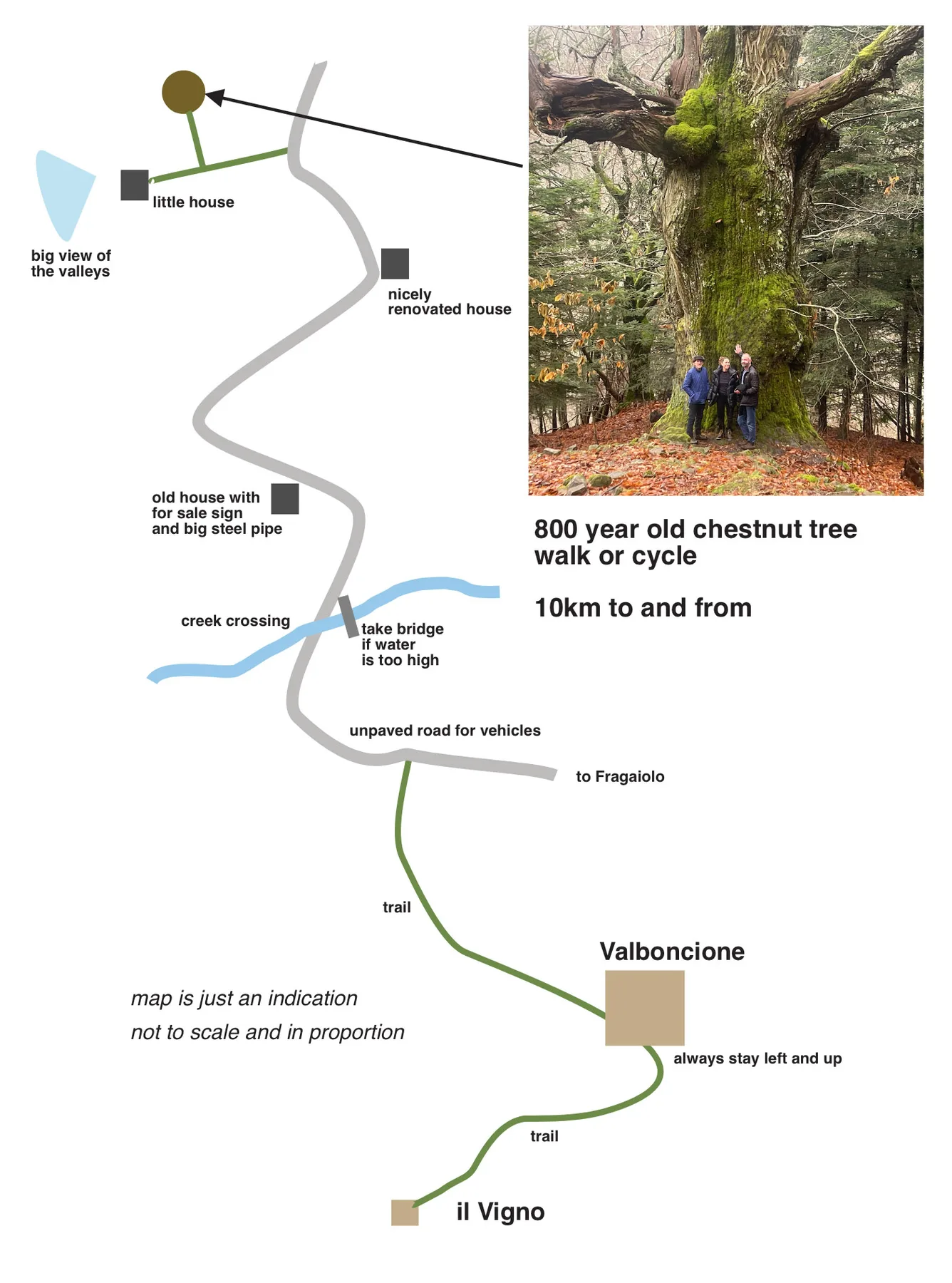
One of the less expected pleasures of staying at Il Vigno is the access to walking directly from the property. The farm sits at 650 metres above sea level, surrounded by a working chestnut forest, and from the gate a network of marked trails connects to the chestnut forest, swimming holes, and the ridgelines of the Apennine foothills within 20 to 40 minutes on foot.
The trails vary in difficulty from gentle valley walks to steeper forest climbs. None require technical equipment — good walking shoes (or light hiking boots in wet weather) are sufficient for everything in the immediate area. We provide all guests with a printed trail map and seasonal notes on arrival. Routes change with the seasons: in summer, the swimming holes along the river are a natural goal; in autumn, the chestnut harvest makes the forest particularly vivid and fragrant.
Chestnut Forest Walks
The ancient chestnut forest surrounding the farm offers shade, wildlife and remarkable silence. Spring and autumn are particularly beautiful.
Ridgeline Views
30–45 minutes uphill from the farm leads to open ridgelines with views across the Tiber valley and, on clear days, the Apennine peaks beyond.
The Apennines
Apennine Trails and
Mountain Landscapes
The eastern boundary of Tuscany follows the Apennine ridge — a chain of mountains that separates the Tuscan valleys from the Marche and Emilia-Romagna beyond. This is wilder, higher country than the rolling hills of the western Tuscan interior: beech forest, open mountain pasture, and rocky summits that offer genuine walking.
The Parco Nazionale delle Foreste Casentinesi — one of Italy's best-preserved national parks — begins just north of Il Vigno. The park contains some of the oldest and most extensive beech forests in Europe, along with the hermitage of La Verna (where St Francis received the stigmata) and a network of long-distance trails that can be walked in sections or combined into multi-day routes.
Casentino Forests National Park
La Verna Hermitage and Sanctuary · Ancient beech and silver fir forests · Long-distance trails linking the Tuscan and Emilian sides of the Apennines · Wildlife including deer, wolves (rare but present) and a spectacular range of birds · Open year-round — most dramatic in late autumn
Seasonal Guidance
When to Walk
and What to Expect
Spring (April–June): The best all-round walking season — warm enough for long days, cool enough for uphill effort, and the wildflowers are extraordinary. Water levels in the streams are high and the forest is at its most vivid.
Summer (July–August): Hot in the valleys but pleasantly cool at altitude. Start early to avoid the midday heat. The swimming holes come into their own — a goal walk to cool water is one of the great summer pleasures at Il Vigno.
Autumn (September–November): Spectacular. The chestnut harvest begins in October. The forests turn gold and red. Porcini mushrooms appear after rain. The light is extraordinary. Il Vigno's best season for walkers.
Winter (December–March): The forest is bare and the ridgelines open. Cold but clear days offer the best long views. Snowfall is possible above 800 metres. A quiet, beautiful time to walk.